
How to Design and Size Your Off-Grid Solar Power System for Maximum Reliability and Efficiency: A Step-by-Step Guide
Taking Control of Your Energy Future: The Off-Grid Promise
In an era of increasing climate volatility and energy price fluctuations, the appeal of complete energy independence has never been stronger. An Off Grid Solar Power System offers the ultimate freedom from utility grids, providing reliable power for remote homes, cabins, agricultural operations, and telecommunications sites. However, designing a system that is both cost-effective and failsafe requires careful planning. This guide walks you through the essential steps to properly size and design your own robust Solar Energy Storage System, ensuring you have power when you need it most.
As a leading green energy solutions provider, VLAND (Vland international ltd) has over a decade of experience helping customers worldwide achieve energy autonomy. Our expertise in solar cells, energy storage systems, and intelligent energy management informs this practical guide.
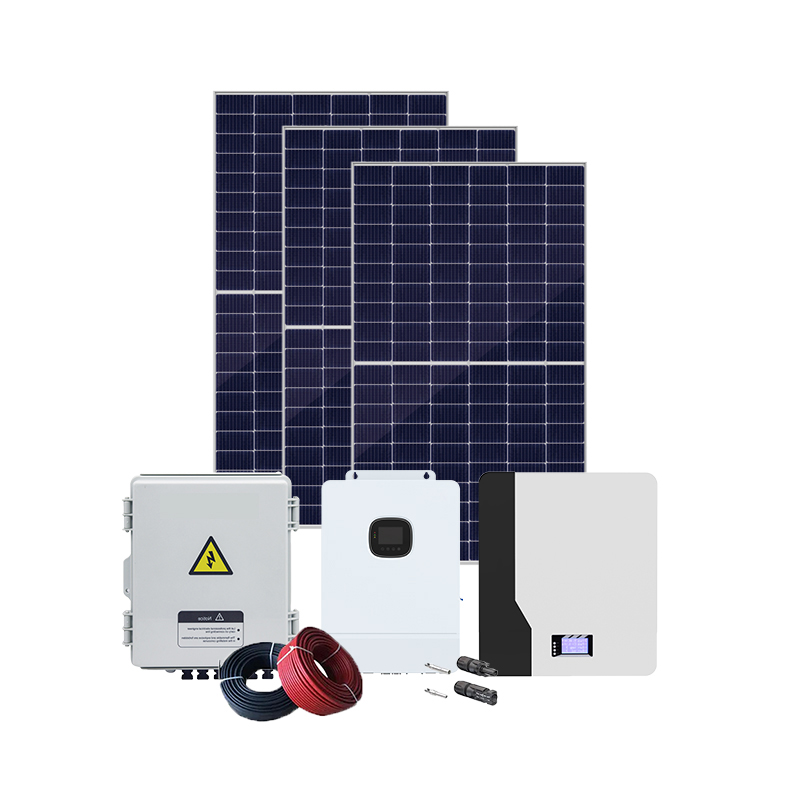
Step 1: Conduct a Detailed Load Analysis – Know Your Consumption
The cornerstone of any successful Off Grid Solar Power System design is an accurate assessment of your energy needs. An undersized system will leave you in the dark, while an oversized one wastes capital.
- List All Appliances & Devices: Create an inventory of every electrical item, from lights and refrigerators to power tools and water pumps.
- Determine Wattage and Usage Hours: Find the power rating (in watts) of each device and estimate how many hours per day it will run. For motors (like pumps or fridges), account for startup surge currents.
- Calculate Daily Watt-Hour (Wh) Consumption: Multiply the wattage by the hours of use for each item, then sum them all. This is your total daily energy demand in watt-hours.
- Example: A 60W LED light running for 5 hours consumes 300 Wh. A 500W refrigerator cycling on/off might use 1200 Wh per day.
This load analysis directly determines the capacity needed for your Solar Battery Storage System and the size of your solar array.
Step 2: Sizing Your Solar Array – Capturing Enough Sun
Your solar panels must generate enough energy to recharge your batteries and meet daily loads, even on shorter winter days or during cloudy periods.
- Account for Sunlight Hours (Peak Sun Hours): This is not daylight hours, but the equivalent hours of full sun your location receives. This varies by season and geography. You can find maps and databases online for your area.
- Factor in System Losses: Real-world systems have inefficiencies. Account for losses in wiring, charge controllers, temperature, and dust (typically 20-30%).
- Basic Sizing Formula:
Total Solar Array Wattage (W) = (Daily Energy Demand in Wh / Peak Sun Hours) / System Efficiency (e.g., 0.8)
If you need 10,000 Wh daily, have 4 peak sun hours, and 80% efficiency: (10,000 / 4) / 0.8 = 3,125 W. You'd need approximately a 3.2 kW solar panel system.
VLAND, as a solar and storage systems integrator, uses advanced simulation software to perform these calculations precisely for each client's unique site.
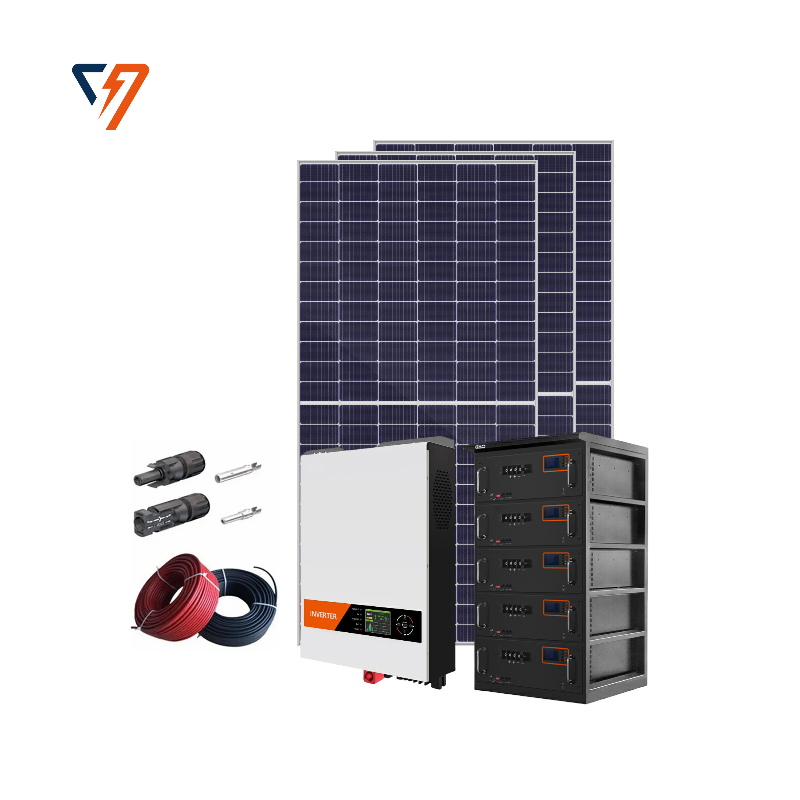
Step 3: Sizing Your Battery Bank – Your Energy Reservoir
The battery bank is the heart of your Home Energy Storage or Industrial Solar Energy Storage System. It stores surplus solar energy for use at night and during poor weather.
- Determine Days of Autonomy: How many consecutive cloudy days should your system handle without solar input? For critical loads, 2-3 days is common. For more remote areas, 5+ days may be needed.
- Understand Battery Depth of Discharge (DoD): Draining a battery completely ruins it. Lithium batteries (like those VLAND uses) can safely discharge 80-90% of their capacity, while lead-acid may only manage 50%.
- Calculate Battery Capacity (in Amp-hours, Ah):
Battery Bank Capacity (Ah) = (Daily Energy Demand (Wh) x Days of Autonomy) / (System Voltage (V) x DoD)
For a 48V system, 10,000 Wh daily load, 3 days autonomy, and 90% DoD: (10,000 x 3) / (48 x 0.9) ≈ 694 Ah.
VLAND's Energy Storage System (ESS) solutions utilize high-cycle-life lithium batteries, offering greater DoD and longevity than traditional options, providing better value over the system's life.
Step 4: Choosing the Right Inverter and Charge Controller
These are the brains of the operation, managing energy flow between components.
- Inverter Sizing: The inverter converts DC battery power to AC for your appliances. Its continuous power rating must exceed the total simultaneous load you might run. Also, it must handle surge currents from motors. For a Solar Kit for Home with a well pump and refrigerator, a 5kW-8kW inverter might be necessary.
- Charge Controller Selection: This regulates the voltage and current from the solar panels to the batteries, preventing overcharging. Maximum Power Point Tracking (MPPT) controllers are far more efficient than PWM types, especially in cold or cloudy weather, and are highly recommended.
- The All-in-One Advantage: Modern solutions like VLAND's All in one solar inverter and battery integrate the inverter, MPPT charge controller, and sometimes the battery into a single, compact unit. This simplifies design, installation, and maintenance, offering a streamlined Home Solar Energy Storage solution.
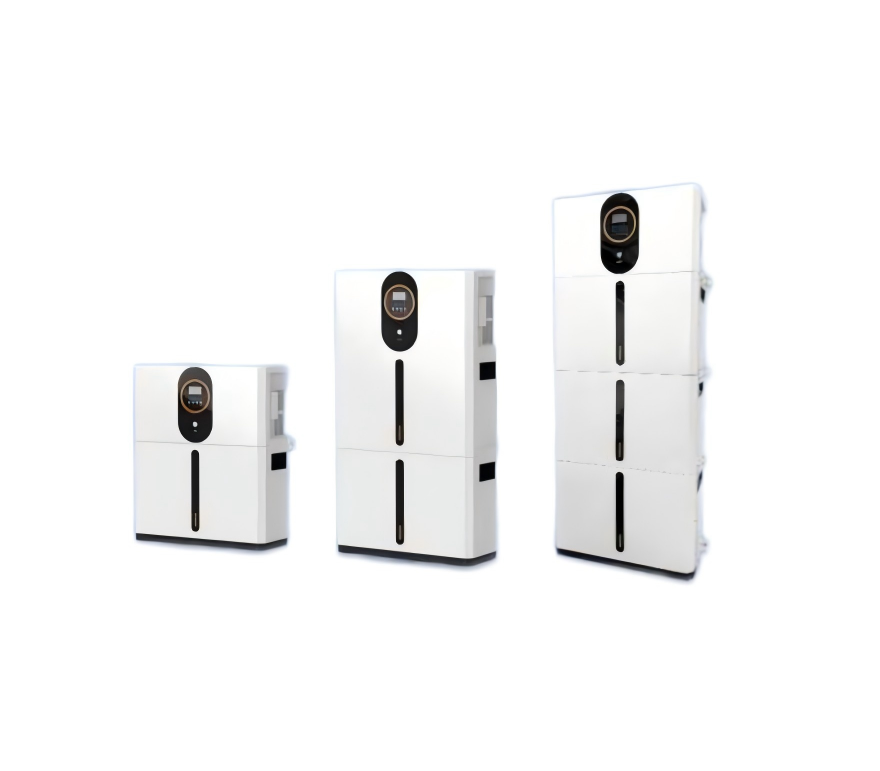
Step 5: System Integration, Monitoring, and Safety
A well-designed Solar Power System is more than the sum of its parts.
- Wiring and Protection: Use correctly sized cables to minimize voltage drop. Incorporate DC and AC circuit breakers, surge protectors, and proper grounding for safety and equipment protection.
- Energy Management: Smart systems, like those offered by VLAND's intelligent energy management platforms, allow you to monitor production, consumption, and battery state in real-time via a smartphone app. They can also prioritize loads and optimize cycles to extend battery life.
- Professional Support: While DIY is possible, partnering with an expert renewable energy specialist like VLAND ensures your system is designed to international standards. Our products carry TUV, CE, IEC certifications (see our CE Certification and Declaration of Conformity, EU DoC), guaranteeing safety and performance. We provide end-to-end R&D, technical support, EPC installation and after-sales service.
Conclusion: Partnering for a Sustainable, Independent Future
Designing a reliable Off Grid Solar Power System is a meticulous process that balances technical calculations with practical realities. By following these steps—meticulous load analysis, precise component sizing, and integrating smart management—you can build a system that delivers true energy independence.
As a committed green energy solutions provider, VLAND International Ltd. is here to guide you through every phase. From supplying high-efficiency solar cells and scalable Energy Storage System (ESS) products to delivering complete microgrid construction and intelligent energy management platforms, we empower you to build an affordable microgrid. Our mission is to provide eco-friendly, renewable, clean, zero emissions, Low carbon technologies that power a sustainable future.
Ready to start your off-grid journey? Contact the VLAND team today for a customized consultation and enjoy the Competitive Price and peace of mind that comes with a professionally engineered Solar Energy Storage System.
VLAND International Ltd.
Phone/WhatsApp: +8613001690010
Email: inn@v-land.ltd
Website: https://www.v-landenergy.com/
Address: Room 316, 3rd Floor, West Annex Building, No. 6 Liuhaohe 3rd Road, Chaohai Subdistrict, Jimo, Qingdao, Shandong, China.
Have Questions or Need More Details?
Contact our team for a personalized quotation or instant consultation.
Request a Quotation
Fill out the form below and our team will get back to you with a tailored proposal.
WhatsApp Direct Chat
Prefer to chat in real-time? Message us on WhatsApp for instant assistance & quick answers.
- Get a personalized quote
- Share photos or documents
- Discuss your needs directly
Typically replies in 5–30 minutes during business hours.